Best Time to Visit Hawaii by Month 2026 — Weather, Prices & What to Pack
I sat on a North Shore lanai in late February watching humpback whales while a friend in New York texted me about $1,400 round-trip flights for the same trip in March. Both of us going, just three weeks apart. Mine cost about half. The water in February was the same temperature, the whales were almost the same density, and the trade-off was a slightly higher chance of rain. That's the version of "when to visit Hawaii" most guides leave out — the price-vs-weather curve isn't smooth, and the sweet spots are narrower than the brochure suggests.
This is the 2026 honest version, by month.
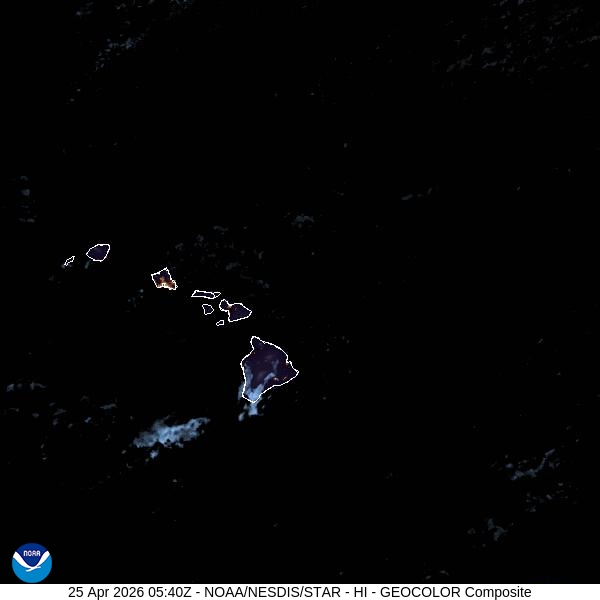 GOES-18 satellite, April 24, 2026 — a snapshot of the trade-wind cloud pattern that defines so much of "Hawaii weather."
The 4 things that matter
Every month decision balances four variables:
- Weather — temperature, rain, wind. Hawaii is warm year-round, but rain bands and trade winds shift.
- Prices — flights and lodging swing 60–80% across the year.
- Crowds — peak weeks fill restaurants, parks, and rental cars.
- Seasonal events — whales, surf, North Shore competitions, festivals.
The "best month" depends on which of these you weight most.
January — whales arrive, prices high, weather mixed
Average temps: 76–79°F daytime, 65°F night Water temp: ~75°F Rain: Heaviest of the year on windward coasts (Hilo, North Shore, east Maui) Crowds: Peak through MLK weekend, eases after Prices: Holiday hangover prices through the first week, then a brief dip mid-month before the long-weekend bump
What's worth doing in January: humpback whale watching (peak season), big-wave surfing on the North Shore, festival watching (Honolulu Festival often in January).
What to skip: outdoor weddings on east-facing coasts (rain), assuming Hilo will be dry.
February — peak whales, peak prices
Average temps: 76–80°F daytime, 65°F night Water temp: ~75°F Rain: Still wet on windward; drier on leeward (Kona, west Maui) Crowds: Presidents' Day weekend is brutal Prices: Highest non-holiday flights of the year for many routes
February is the apex of whale season. If whales are why you're going, this is the month. The trade is paying for it. Plan around Presidents' Day weekend.
March — spring break swing, crowds spike then crash
Average temps: 77–80°F daytime, 65°F night Water temp: 75°F Rain: Tapering on windward coasts Crowds: Spring break weeks are crowded, otherwise normal Prices: High during break weeks, drop sharply after Easter
The first half of March is shoulder. The middle (spring break) is peak chaos at family resorts. End of March is one of the better value windows.
April — sweet spot (warm, drier, mid-prices)
Average temps: 78–82°F daytime, 67°F night Water temp: 75°F Rain: Lowest annual precipitation on most islands Crowds: Easter week aside, manageable Prices: Mid-range, often the best balance of weather and cost
April is the contrarian sweet spot. Whale season is winding down (some still around through early April), but surf is calmer, rain is at its lowest, and prices are reasonable. If you're choosing one month based on the math, this is it.
May — last value month before summer
Average temps: 80–84°F daytime, 68°F night Water temp: 76°F Rain: Low, especially mid-month Crowds: Quiet first 2 weeks, picks up Memorial Day Prices: Lowest of the year for flights from many U.S. cities
If you want the cheapest week to fly with the best weather of spring, target May 5–22. After Memorial Day, prices and crowds shift to summer mode.
June — family season starts
Average temps: 81–85°F daytime, 69°F night Water temp: 77°F Rain: Low, mostly leeward stays dry Crowds: Picks up steadily through the month Prices: Climbing through the month
June is the start of family season. Resort prices climb each week. Schools out around mid-June varies by region.
July — peak family, peak prices
Average temps: 82–86°F daytime, 70°F night Water temp: 78°F Rain: Lowest of year on leeward Crowds: Highest of year alongside late December Prices: Peak summer rates
July is when "vacation Hawaii" peaks. Hot, dry, busy, expensive. Plan way ahead — restaurant reservations, snorkel charters, popular hikes (Diamond Head, Pearl Harbor, Hanauma Bay) all fill 60+ days out.
August — peak continues, gradual ease
Average temps: 82–87°F daytime, 70°F night Water temp: 79°F Rain: Low on leeward, increasing on windward late August Crowds: Still peak through mid-month, ease after Prices: Slightly off July highs by mid-month
The water is warmest. Hurricane season begins to be a real thing on the East Pacific (rare landfall but ocean swells happen).
September — locals' month
Average temps: 82–87°F daytime, 70°F night Water temp: 79°F Rain: Increasing on windward, leeward stays dry Crowds: Lowest of year Prices: Year-low for flights and lodging
The contrarian take: September is the locals' month. Prices crash, water is at its warmest, restaurants don't have wait lists. The trade is some humidity and the small possibility of a tropical disturbance. For repeat visitors, September is the answer.
October — shoulder, occasional rain
Average temps: 81–86°F daytime, 70°F night Water temp: 78°F Rain: Increasing on windward; first measurable rain on leeward Crowds: Quiet Prices: Year-low continuing through mid-month, climbing late
October mirrors May in many ways — pleasant weather, low crowds. Ironman Kona happens in mid-October — affects Big Island lodging only.
November — calm, prices climb
Average temps: 79–83°F daytime, 68°F night Water temp: 77°F Rain: Increasing on all islands Crowds: Build through Thanksgiving week Prices: Climbing toward holiday peak
The first week of November is one of the best value weeks of the late year. Thanksgiving week is full-peak.
December — holiday spike + big surf returns
Average temps: 76–80°F daytime, 66°F night Water temp: 76°F Rain: Wet on windward coasts Crowds: Holiday week is the most expensive of the year Prices: Highest of year for late December
North Shore big-wave season starts. Surf contests (Pipe Masters / Vans Triple Crown) draw crowds and tighten lodging on Oahu's North Shore. Christmas–New Year week is the priciest week of the year.
Best month for X (quick reference)
- Snorkel: April–May or September (calm water, low crowds)
- Surf: December–February (North Shore big waves)
- Hike: April–May, October (cooler, drier)
- Family: June–July (school schedules) or shoulder if flexible
- Romance: April–May or September (less crowded, value)
- Whale watching: January–March, peak February
- Cheapest flights: May or September
- Avoid: Christmas–New Year, July 4 week, Presidents' Day weekend (unless you've planned 6+ months out)
Frequently asked questions
Cheapest month? September is the year-round low. May and early November also strong.
Best for surf? December–February for North Shore big waves. Year-round for beginner waves on the south shore.
When are prices lowest? Flights: September, then May. Lodging: September, October, mid-November.
Hurricane risk months? June–November. Rare landfall in Hawaii (sometimes 1–2 close calls per year). Storms more often produce big surf and rain.
Best for whales? February. January and March secondary. Trickle into early April.
Best for hiking? April–May, October–early November. Cooler temps, lower humidity, dry trails.
Deep-dive into specific months and topics with the Hawaii Packing List 2026, Best Maui Beaches 2026, Big Island in 5 Days, Diamond Head Hike Guide, Hanauma Bay Reservations, Best Luaus on Oahu, Best Brunch in Honolulu, Best Sunset Spots, Best Snorkeling on Oahu, Pearl Harbor Visitor Guide, North Shore Oahu Guide, Hawaii Date Night Ideas. Live Hawaii cams at Port of Cams.
Stay in the loop
Get the Friday Hawaii events email
Free. One email a week with what's happening across the islands. No spam, unsubscribe anytime.